Site Architecture
Consolidating three platforms into a unified content structure, reducing content topics by 37% and pages by 68%.
2024
Year
3 month
Duration
T-Mobile
Company
IA & Content Strategy
Category
Problem
T-Mobile was consolidating three core internal platforms into a single employee experience, but lacked a unified content structure to bring them together.
With over 9,000 pages across SharePoint, AEM, and Bigtincan, content was scattered and duplicated, making it hard for employees to find what they needed.
My Role
I owned the content inventory, heuristic analysis, and initial content categorization for T-Nation, the platform's largest content repository, conducting a full audit across 58 SharePoint sites.
I then contributed to card sorting and business validation across all platforms, working alongside UX researchers and content SMEs to deliver the final information architecture.
Solution
A unified information architecture consolidating content from three platforms, reducing topics from 60 to 38 and total pages by 68% from 9000 to 3000. The structure was validated through user research and business collaboration, giving content teams a clear foundation to migrate and manage content at scale.
Content Inventory
Going into the project, there were no centralized metrics of what content existed, how relevant it was, or how it was being used. Before any architecture decisions could be made, we needed a clear picture of the full content scope.
I reviewed and pulled metrics for individual content pieces and categories across T-Nation's 58 SharePoint sites, covering page volume, engagement, update frequency, access restrictions, and content type. Partner teams conducted the same process for the remaining platforms.
ex. T-Nation content inventory
An internal platform that served as a central point of access for all employee engagement and resources.
Site complexity
High — Due to diverse content structures across 58 SharePoint sites within collection, complex sub navigation structures
Update frequency
Highly varied — Dependent on microsite. Reported avg for homepages is about one a month
Types of content
Primarily text & image heavy resources, documents, news, and training.
Access restrictions
Varied — content available to all internal employees, but specifically restricted to contract, care & global service partners.
Volume & Analytics
High — over 9000 pages
2024 page views — 7,850,130
3,500 pages with >0 page views
(62% with visits)
Heuristic Analysis
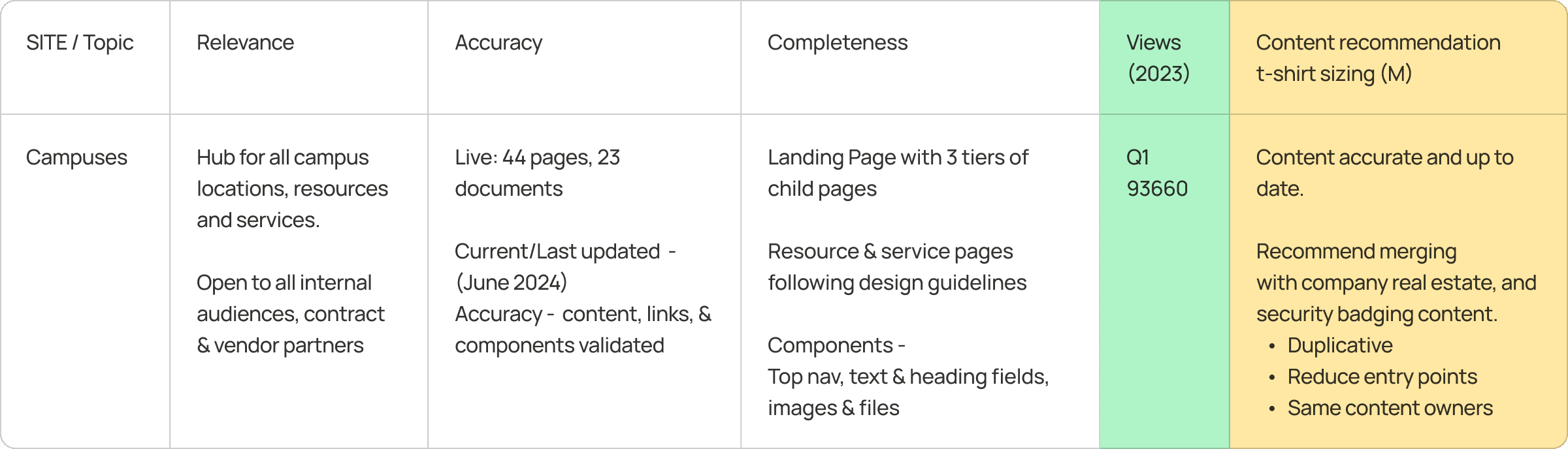
Using the inventory metrics, I conducted a deeper analysis of each content area to determine migration value based on five factors:
Relevance – what is the content purpose & audience?
Accuracy – is content up to date? Do components function properly?
Completeness – does it follow design standards? What is the scope end to end?
Engagement – is the content visited and to what degree? How do users interact?
Redundancy - can the content be consolidated or removed?
The analysis informed which content to migrate, consolidate, or remove, reducing topics from 60 to 38 and pages from 9,000 to 2,000.
ex. Campuses site heuristic analysis
Content Categorization
With a detailed content scope, I developed an initial mapping of topics into a two-level hierarchy, drawing on existing site maps, SME input, content journeys and ChatGPT to explore groupings quickly. This helped produce a familiar structure for testers to react to when beginning validation.
Card Sorting
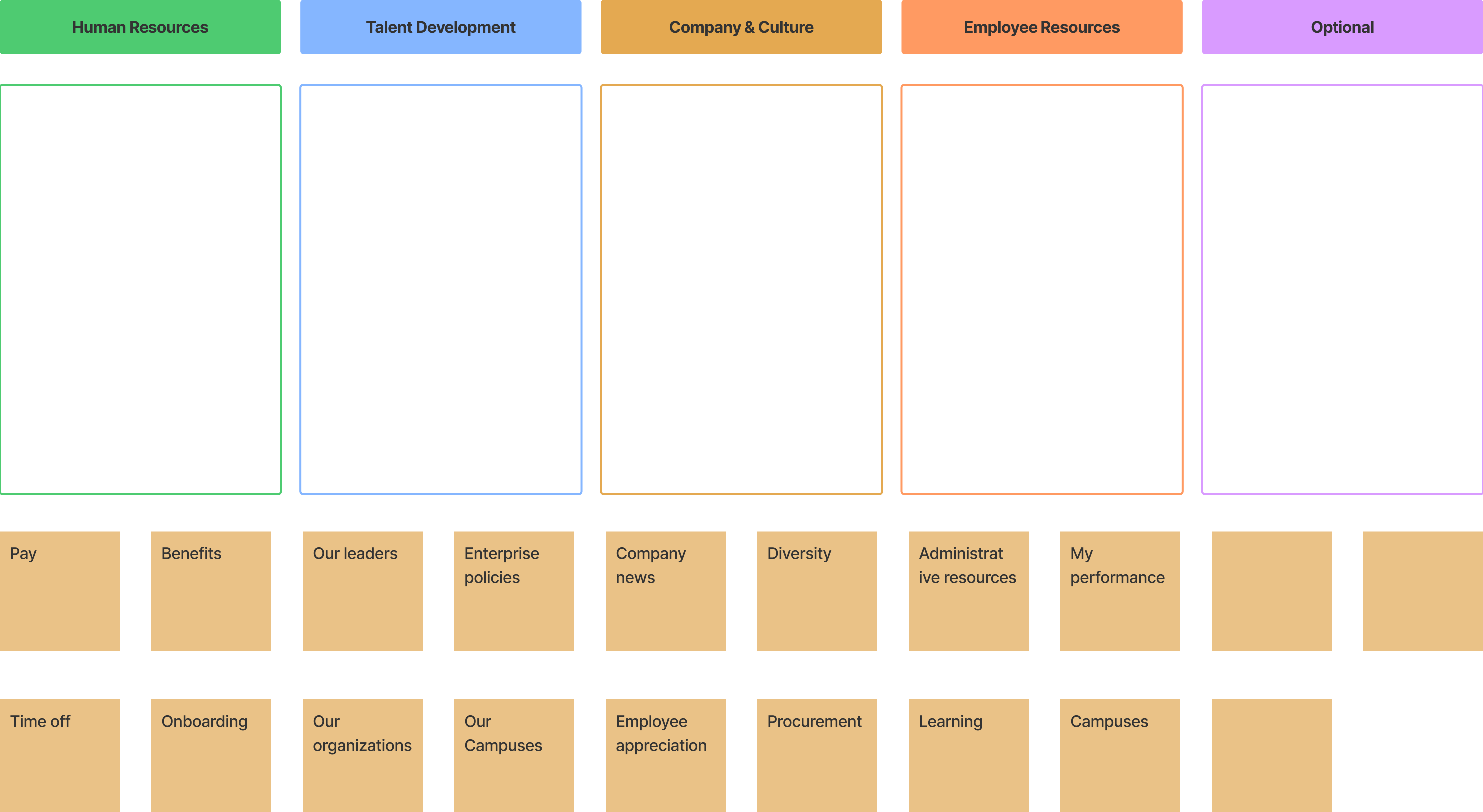
We tested the taxonomy with 39 employees across retail, care, and corporate archetypes using a hybrid card sort, allowing participants to sort cards into provided groups while also creating their own. This method helped surface gaps and validate whether the proposed structure matched how employees naturally grouped content.
Participants represented a variety of organizations and job experience levels:
Corporate - back office employees supporting business functions (38%)
Retail - frontline workers serving customers in stores (34%)
Care - over the phone service support for customers (28%)
From users:
"I want to be able to find the information I'm used to in a similar place."
"I like that I won't have to switch between platforms."
"Will I be able to find my most needed resources quickly?"
"I've noticed this section has a lot of outdated pages."
ex. Card sort
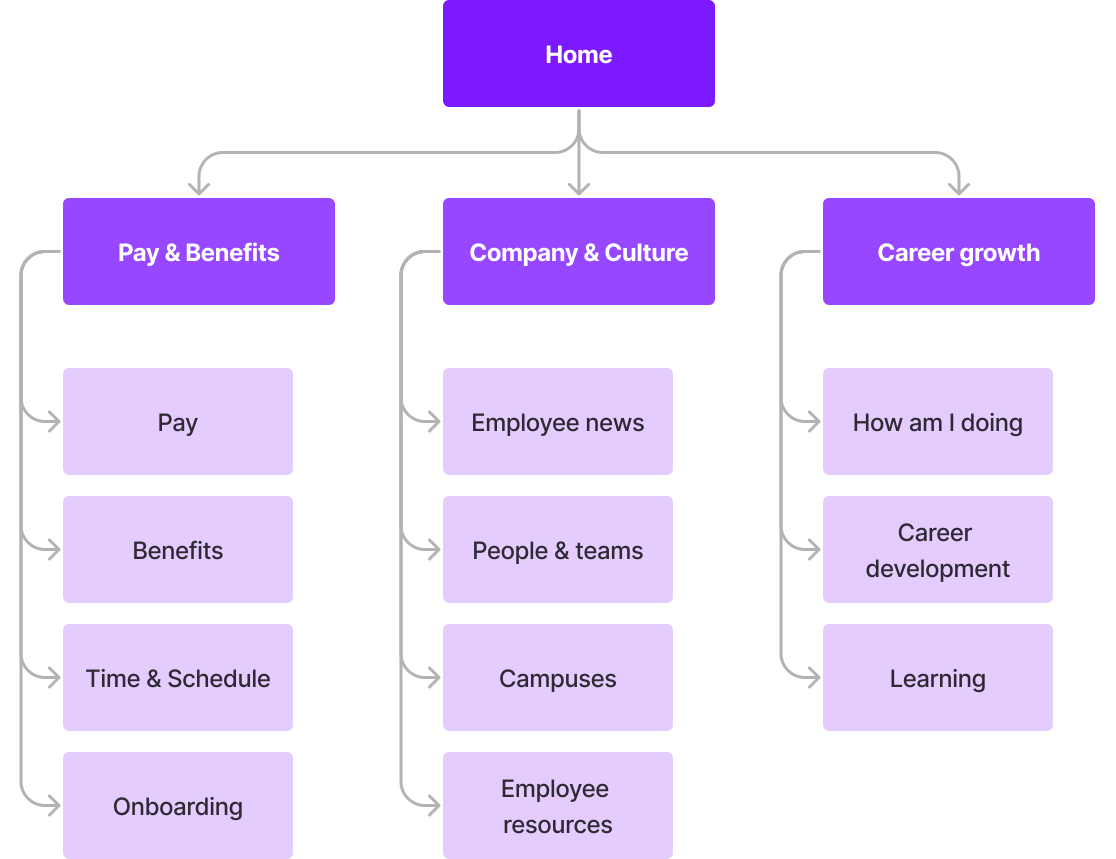
ex. User categorization
Business Validation
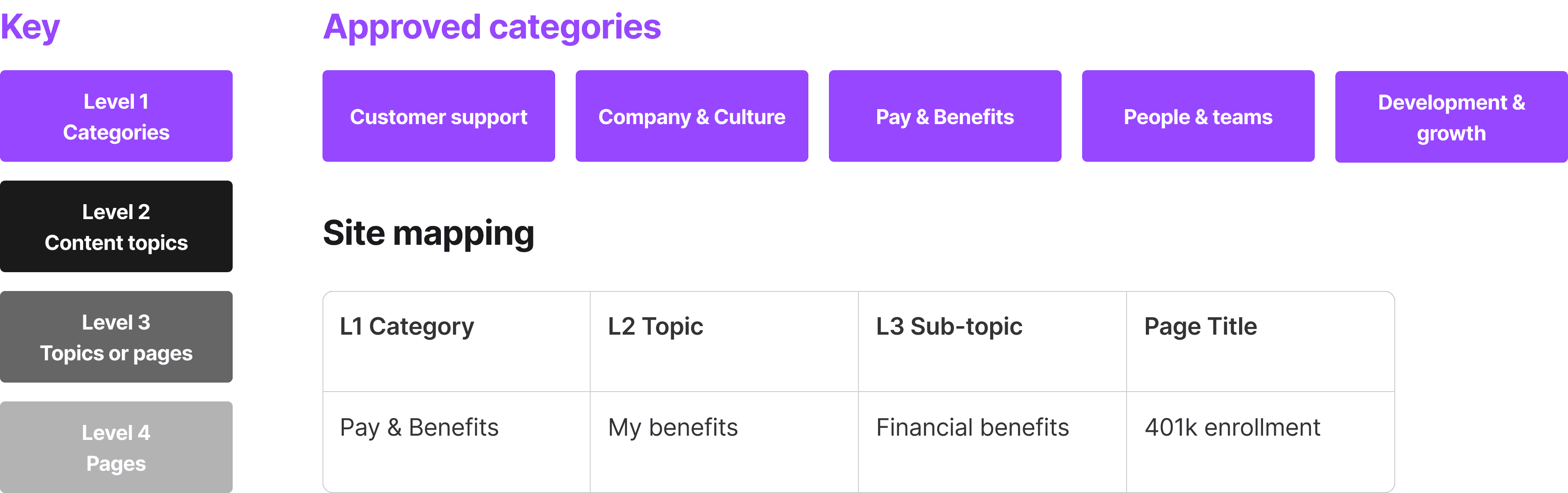
Consolidating the research finding, we presented the proposed structure and user-generated site map to content owners and the project team.
The first two levels of hierarchy were largely approved, with some changes to taxonomy revisions and category prioritization. Content teams then mapped the remaining topics and pages into the full four-level hierarchy.
Final Touches
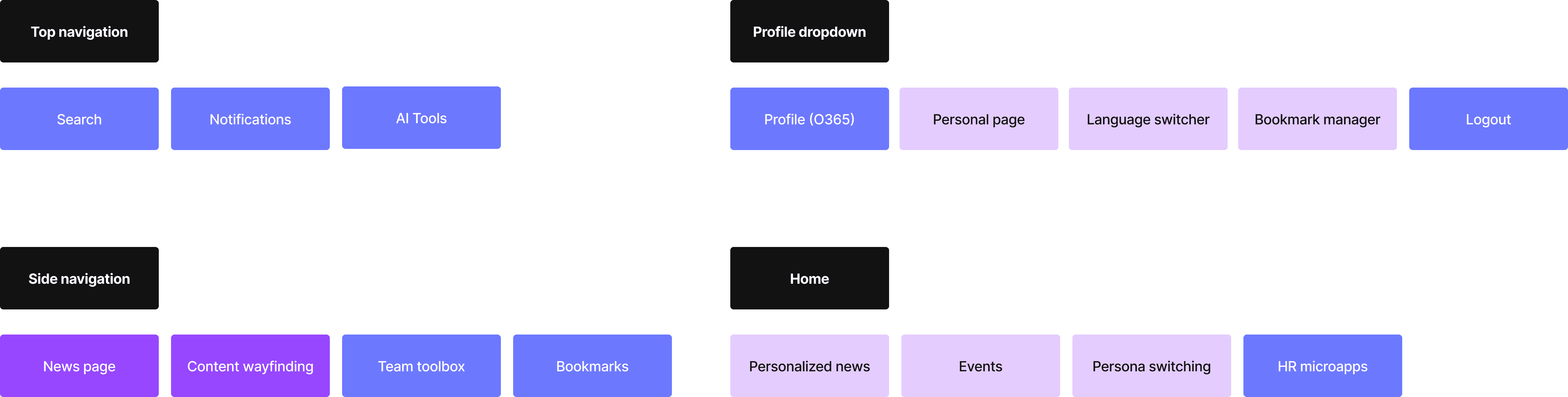
With the core IA approved and mapped, I worked with development and platform governance teams to determine placement for platform features across top navigation, side navigation, profile, and home page. These features addressed gaps found in research outside of the core content structure.
Wrapping Up
With great content comes great responsibility. This IA was the collaborative effort of multiple platform, workstream, and content teams, successfully merging three enterprise platforms into a single unified structure. The result set the path for incoming content migration and ongoing platform management.
The content audit required a close examination of every existing page and section across platforms, raising the bar of understanding for content scope and purpose across all partner teams. The process also surfaced the need for a stronger governance model, opening discussions about how content would be managed and maintained going forward.